

How to Read a Skincare Ingredient List to Know What you are Actually Buying?

Ever felt lost while reading the incomprehensible ingredients that are at the back of the product that you have picked at the skincare aisle? It must have felt like reading an alien language for most. You are left wondering about the actual contents in the products. Whether it will work on your skin? Will it be suitable? Or is it all marketing noise?
Learning how to read skincare ingredients is a necessary skill that will help you ignore that noise and enable you to make informed decisions and will also do long term favors for your skin's health.
Learning this will turn you from a passive consumer into an empowered shopper who will not be easily swayed by the marketing noise and will result in a lot of savings with respect to your time and money as well as avoiding potential skin ailments. By understanding (INCI) International Nomenclature of Cosmetic Ingredients, which is the standard system of labeling, you will be able to identify what exactly you are putting on your skin, can discern the impactful actives from the filler ingredients and decide whether the product meets your purpose.
The Descending Order of Concentration in Ingredient Lists:
The basic principle to understand is that ingredient lists are in a descending order of concentration. Basically the first five ingredients take up the bulk whereas those at the end have a concentration of either 1% of very less.
Key Things to Consider:
-
The first 5 ingredients form the product and are most active.
-
Ingredients that are 1% or less that are listed after preservatives such as Phenoxyethanol or Potassium Sorbate are present at 1% or less. This is where you will be able to find all the overhyped ingredients that form the crux of the marketing on the product’s packaging but are used in very miniscule quantities.
Guide to Decode Common Ingredients:
Seek Out Active Ingredients:
These are the ingredients that must be sought out as they possess proven benefits for most skin ailments.
-
Hydration: Hyaluronic Acid, Glycerin, Panthenol (Vitamin B5)
-
Anti-Aging and Skin Brightening: Retinol, Vitamin C (L-Ascorbic Acid), Niacinamide, Peptides
-
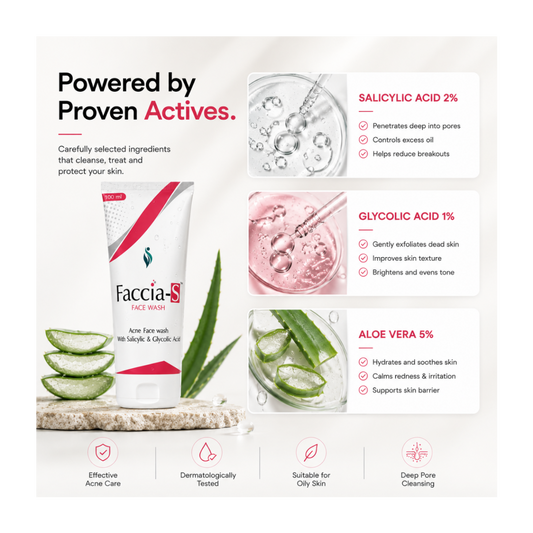
For Exfoliation: Glycolic Acid (AHA), Salicylic Acid (BHA), Lactic Acid
-
For Soothing Barrier Repair: Ceramides, Centella Asiatica (Cica), Niacinamide, Oat Extract
Base Ingredients and their Roles:
Think of these ingredients as the support crew, they are not considered “active” but are basically essential for the texture, stability and delivery.
-
Emolliments (Skin Smootheners): Squalane, Jojoba Oil, Caprylic/Capric Triglyceride
-
Emulsifiers (Oil and Water Binders): Ingredients such as Cetearyl Alcohol, Polysorbate 60 bind oil and water together and create stable lotions/creams.
-
Preservatives: Despite their negative connotations, they are vital to prevent bacterial and fungal growth, making sure the product is safe to use throughout its lifespan. Notable preservatives include, but are not limited to: Phenoxyethanol, Benzyl Alcohol
Ingredients that Might Require a Second Look:
Not that these ingredients are bad, however some of them are not suitable for certain skin types and might lead to reactions on the skin.
-
Fragrance: They are simply labelled as “parfum” or “fragrance”. They are a common irritant and can also be a potential allergen for those with sensitive skin.
-
Essential oils: Include Lavender Oil or Citrus Oils. Despite being natural they are sensitizing and can lead to irritation over long periods of time for the wrong skin types.
-
Alcohols: SD Alcohol 40 or Denatured Alcohol that is usually found high on the list has the possibility of being capable of stripping the skin barrier.
Your Step-By-Step Process for Reading All Labels:
-
Go through the First 5 Ingredients: If you are purchasing a hydrating serum then active ingredients that contribute to hydration such as Hyaluronic Acid or Glycerin will be on the top.
-
Locate the Main Actives: Basically, find the ingredients that have been advertised on the packaging and see if they are added on the top of the list or at the very end.
-
Check for Preservatives: Basically, if you find the preservatives then any ingredients listed below it will fall under the 1% concentration category.
-
Identify Potential Irritants: If sensitive skin is your type the it is better to look for potential irritants such as Fragrance or Parfum or large concentrations of essential oils.
Being uninformed in the language of skincare ingredients can be significantly taxing. Not just on your time and money but on your skin’s health too. Therefore having a fundamental understanding of skincare labels at the back of the product can save you from a future of breakouts, irritations and redness and other skin ailments that arise from an uninformed purchase decision.


2 Comments
Thank you for the article. It’s very informative. https://www.formulatorshubkenya.com/